
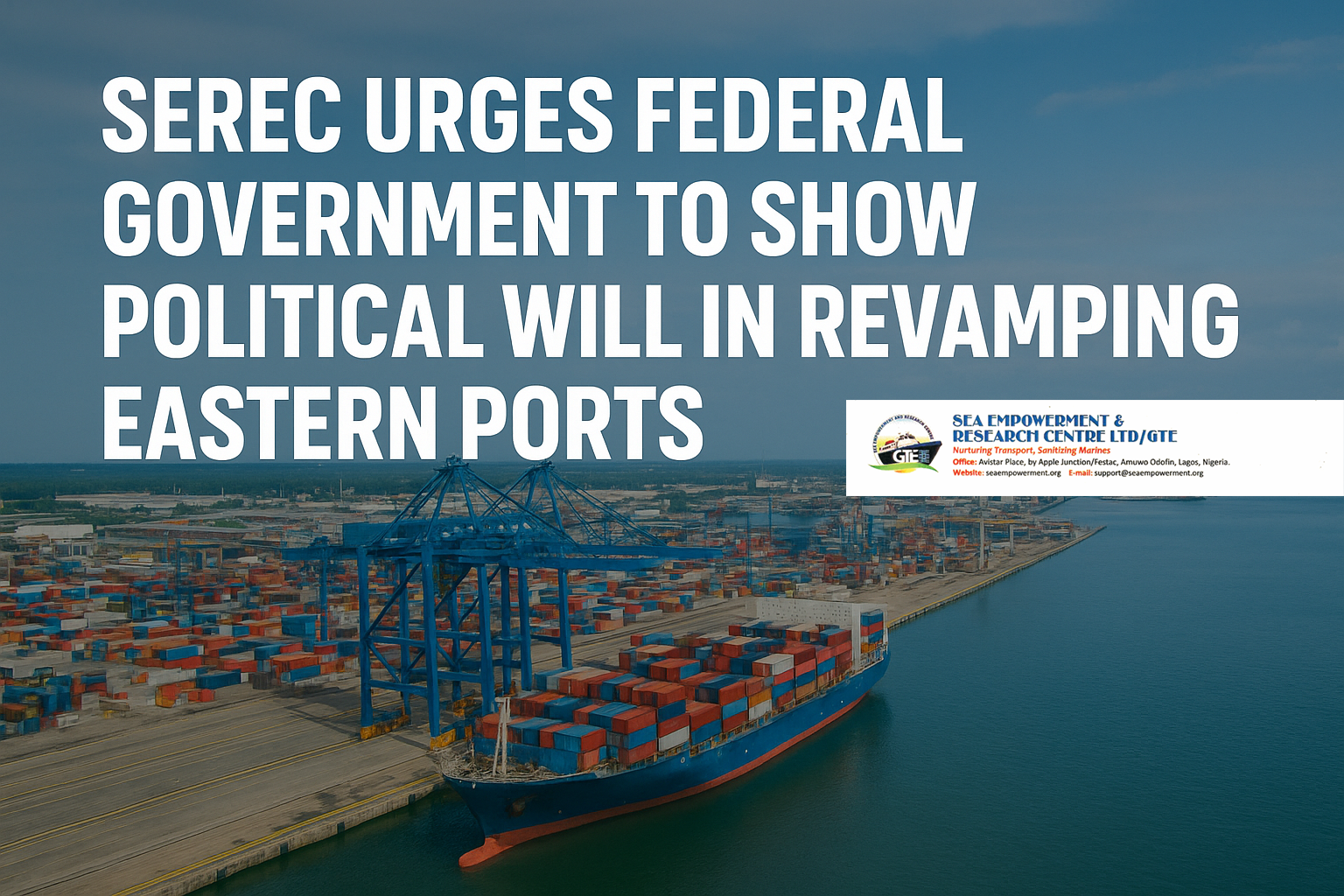
The Sea Empowerment and Research Centre (SEREC) has called on the Federal Government to demonstrate genuine political will and commitment towards the full development of the Eastern Seaports: Onne, Calabar, Port Harcourt, and Warri noting that these ports hold significant untapped potential for Nigeria’s maritime growth.
According to Dr. Eugene Nweke, Head of Research at SEREC, the perceived high cost of operations at the Eastern ports compared to Lagos ports is not rooted in tariff differences, but rather in years of infrastructural neglect and policy imbalance.
“The notion that Eastern ports are expensive is a myth created by long-term neglect,” Nweke emphasized. “With the right infrastructural attention and fair regulatory action, these ports can become competitive, ease congestion in Lagos, and restore regional economic balance.”
Key Development Priorities
SEREC outlined several measures to reposition the Eastern ports, including:
- Comprehensive dredging and modernization to achieve full draft capacity.
- Rehabilitation of rail lines and inland waterways to improve cargo movement and connectivity.
- Implementation of cargo-sharing policies to balance port utilization across regions.
- Incentives for shipping lines to increase calls at Eastern ports.
- Depoliticization of port management, prioritizing national economic development over regional interests.
Challenges Behind High Operational Costs
SEREC identified the following structural issues as the real drivers of cost disparities:
- Infrastructure Decay: Collapsed quays, obsolete cargo handling equipment, and shallow drafts that restrict large vessel access.
- Poor Connectivity: Weak road and rail networks, insecurity, and poor logistics increase haulage costs.
- Shipping Line Surcharges: Extra fees imposed due to low traffic, poor facilities, and perceived insecurity, inflating freight costs.
Policy Imbalance and Neglect
The Centre noted that while modernization efforts have focused heavily on Lagos, investments in the Eastern ports have been delayed or ignored. This imbalance, it said, sustains unequal port patronage and undermines regional trade potential.
“Nigeria possesses natural harbours that many nations spend billions to create artificially,” Nweke added. “Yet, we continue to make operational excuses rather than optimize what we already have.”
SEREC urged the government to correct long-standing infrastructural and regulatory gaps, stressing that the Eastern ports are costlier by neglect—not by design or policy. With deliberate investment and balanced policy attention, the Centre believes the Eastern corridor can emerge as a thriving hub for trade and industrial growth, complementing Lagos and driving inclusive maritime development across Nigeria.