
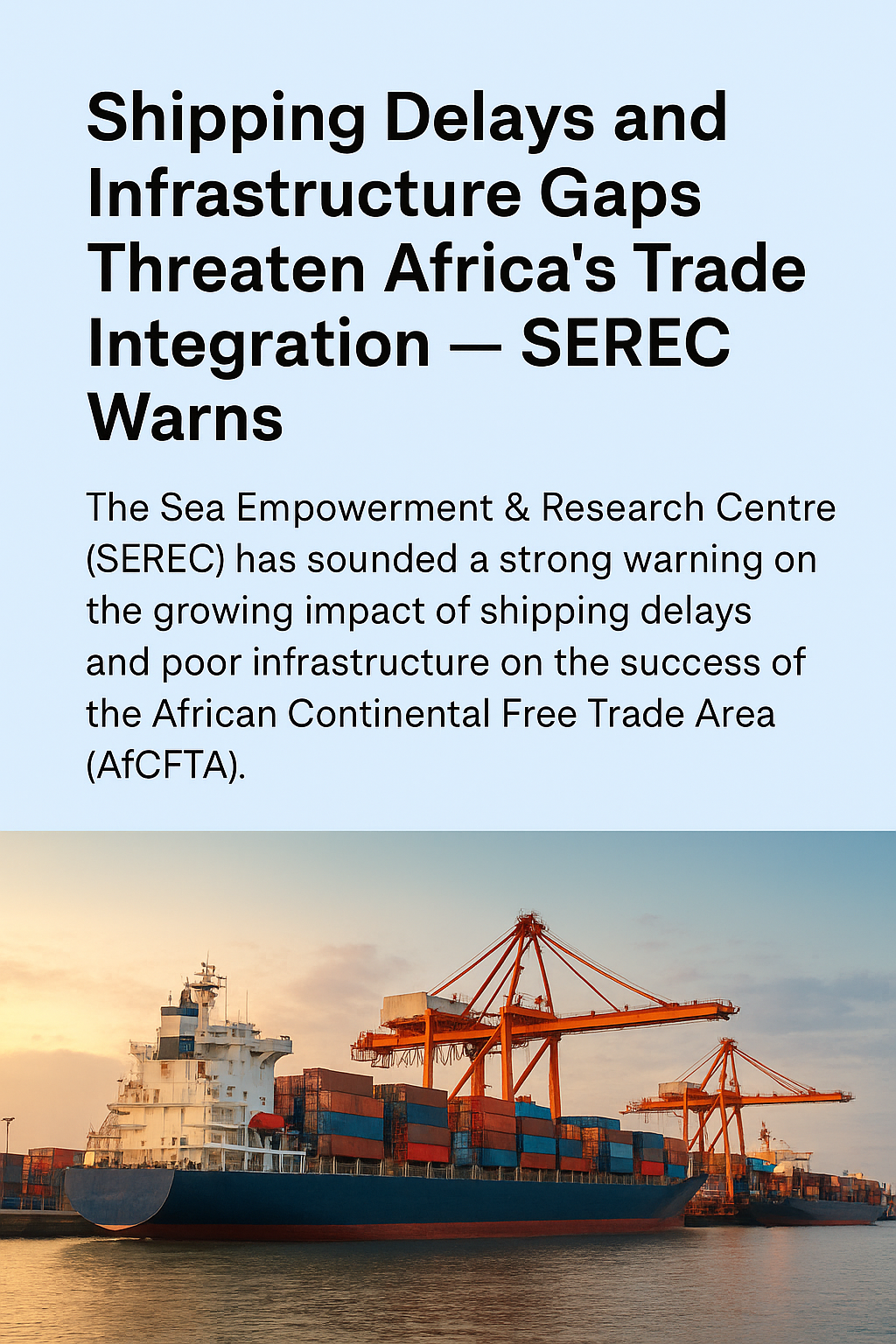
The Sea Empowerment & Research Centre (SEREC) has sounded a strong warning on the growing impact of shipping delays and poor infrastructure on the success of the African Continental Free Trade Area (AfCFTA).
In its latest maritime insight report, SEREC noted that Africa’s logistics and transport systems remain far from adequate to sustain the expected rise in regional trade, describing the situation as a “major setback to continental economic integration.”
A Maritime Reality Check
The Centre revealed that despite AfCFTA’s vision to connect a market of over 1.3 billion people, African exports and imports still rely heavily on non-African ports for trans-shipment — a pattern that prolongs delivery times by as much as 50 days and increases trade costs.
SEREC emphasised that this reality undermines Africa’s goal of self-reliance and weakens the competitiveness of regional goods and services in global markets.
“Africa cannot talk about a free trade area without free, efficient, and reliable maritime connections,” said Mr. Eugene Nweke, Head of Research at SEREC.
“Every delay at our ports, every outdated logistics process, and every missing infrastructure link is a direct obstacle to AfCFTA’s promise. The maritime sector must be treated as the heart of Africa’s trade system, not its afterthought.”
The Cost of Inaction
SEREC’s assessment aligns with projections indicating that the continent needs over $120 billion by 2030 to close the maritime and logistics gap.
Without urgent investment, the centre warned, Africa risks losing the developmental benefits of AfCFTA — including job creation, industrialisation, and regional value chains.
The Centre added that several African countries still struggle with congested ports, weak road and rail links, and manual customs systems, which continue to discourage efficiency and increase operational costs for traders and ship owners alike.
SEREC’s Key Findings
- Fragmented Shipping Routes: Intra-African goods often transit through foreign ports instead of direct regional routes.
- Limited Regional Shipping Capacity: The absence of African-owned and operated shipping lines weakens continental control over trade logistics.
- Poor Infrastructure and Technology: Most ports lack modern equipment, data systems, and intermodal connectivity.
- Underdeveloped Value Chains: The majority of exports remain unprocessed, reducing Africa’s earnings potential.
- Weak Policy Implementation: Trade policies often fail due to lack of coordination among regional blocs and agencies.
Recommendations for a Maritime Turnaround
SEREC has urged African governments and maritime authorities to take immediate, strategic actions that will restore efficiency and build a resilient logistics ecosystem. These include:
- Developing regional short-sea shipping corridors to strengthen intra-African connectivity.
- Investing in port digitalisation and customs automation to cut clearance time.
- Establishing public-private partnerships (PPPs) for port infrastructure and logistics financing.
- Building human capacity through maritime training and certification programs.
- Promoting policy harmonisation and regional collaboration among trade blocs.
Maritime Empowerment: The Foundation of AfCFTA
SEREC reaffirmed its commitment to supporting Africa’s maritime transformation through continuous research, advocacy, and collaboration with both public and private sector players.
“AfCFTA will only succeed when we strengthen the maritime link that binds African economies together,” Mr. Nweke added.
“Sea Empowerment will continue to advocate for a continent that trades with itself and empowers its people through maritime development.”
About SEREC
The Sea Empowerment & Research Centre (SEREC) is a division of Sea Empowerment, dedicated to advancing maritime research, blue economy development, and trade facilitation across Africa.
Through evidence-based studies, capacity building, and stakeholder engagement, SEREC works to make Africa’s seas a driver of growth, sustainability, and empowerment.