
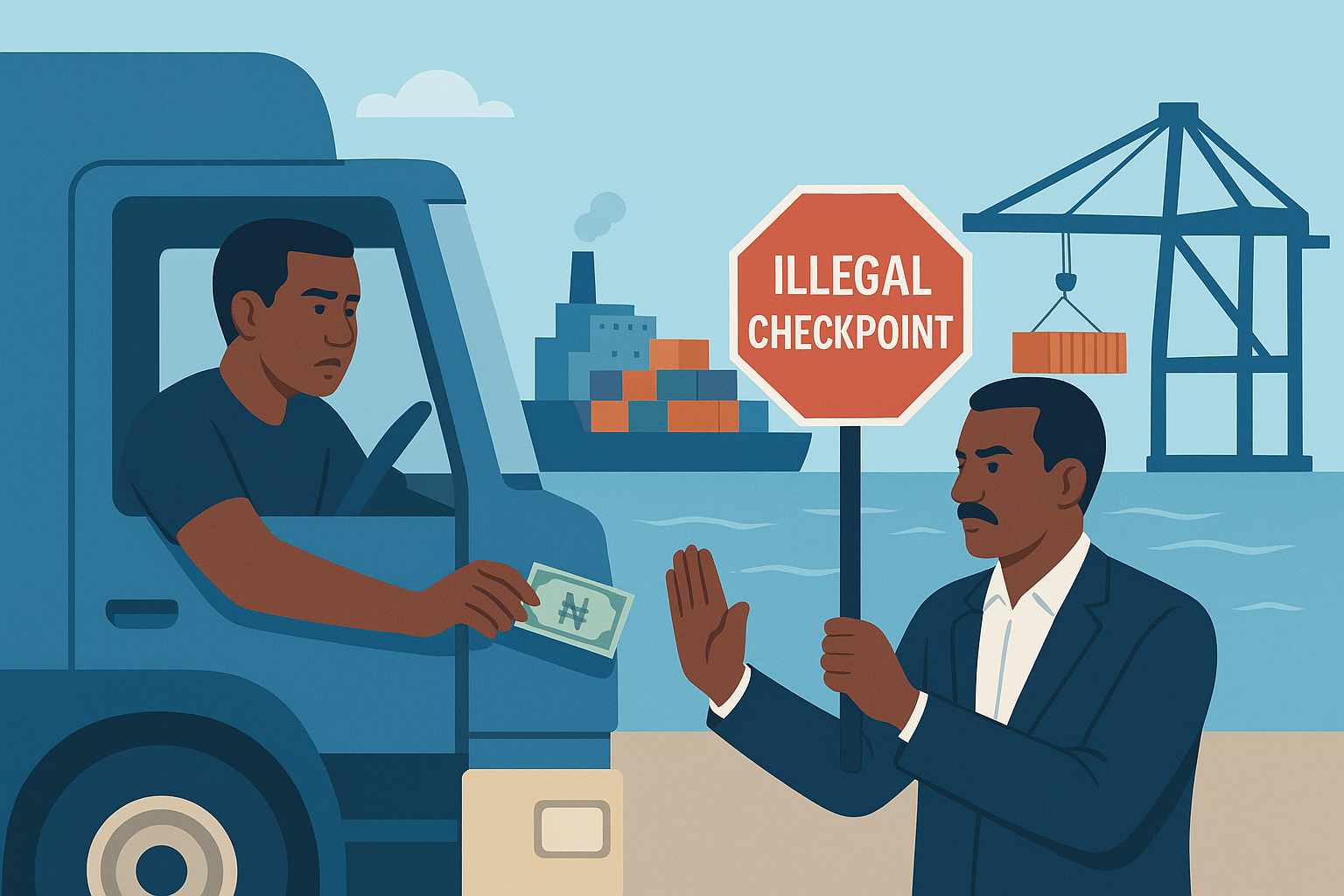
The Sea Empowerment and Research Centre (SEREC) has released a damning investigative report exposing a sophisticated web of illegal extortion activities along Nigeria’s major trade and port access corridors, estimated to drain the nation of over ₦7.6 trillion annually.
The report, titled “Persistent Menace of ‘Camp Boys’ (Kerebe/Area Boys): An Organised Extortion Network Undermining Trade Facilitation Along the Port Access Corridors, Lagos–Abidjan Trade Route and Eastern Port Axis,” reveals the entrenched nature of these networks operating between port terminals, road checkpoints, and border routes.
According to SEREC’s Head of Research, Mr. Eugene Nweke, the extortion system thrives through informal levies, intimidation, and multiple illegal checkpoints often mounted by both non-state actors and complicit security personnel. “These activities not only inflate logistics costs but also deter investment, disrupt cargo movement, and undermine Nigeria’s competitiveness within the West African sub-region,” Nweke stated.
The research, backed by data from PricewaterhouseCoopers (PwC), the Nigerian Ports Authority (NPA), and the Nigerian Shippers’ Council (NSC), places the country’s annual trade corridor losses between ₦2.5 trillion and ₦7.6 trillion—funds that could otherwise drive port infrastructure renewal and transport reforms.
Field observations by SEREC reveal that along key transit routes such as Lagos–Abidjan and the eastern ports (Onne, Port Harcourt, Calabar, Warri), extortion networks impose illegal charges ranging from ₦10,000 to ₦250,000 per truck. At the Seme border alone, SEREC documented approximately 64 illegal checkpoints, each managed by groups locally referred to as Camp Boys, often supported by uniformed operatives.
A Call for Urgent National Action
To curb the menace, SEREC has proposed a seven-point national response strategy, urging both federal and state authorities to adopt a zero-tolerance approach to extortion and corruption across trade corridors.
The recommendations include:
- A Presidential Enforcement Directive to dismantle illegal checkpoints nationwide.
- Establishment of a Corridor Monitoring and Enforcement Taskforce, comprising NPA, Customs, Police, FRSC, NSC, and civil society representatives.
- Deployment of technology-driven monitoring tools such as CCTV, drones, and GPS tracking systems.
- Creation of a publicly accessible checkpoint database and whistleblower system for truck drivers and freight agents.
- Prosecution under the EFCC and Miscellaneous Offences Acts for any officials or associations involved in aiding extortion.
- Strengthening the Presidential Port Standing Task Team (PPSTT) with measurable Key Performance Indicators (KPIs).
- Enhanced regional collaboration to improve the Lagos–Abidjan trade corridor and Nigeria’s competitiveness under AfCFTA.
Economic and Trade Impact
SEREC projects that if the recommendations are fully implemented, cargo transit time could be reduced by up to 50% within six months, while Nigeria could recover more than ₦130 billion annually in lost port and customs revenue. This, the Centre noted, would also rebuild investor confidence, reduce transport costs, and position Nigeria as a reliable logistics hub in West Africa.
“The time has come to dismantle these extortion networks that thrive on inefficiency and corruption,” Mr. Nweke stressed. “Trade corridors must serve commerce, not criminality.”
SEREC reaffirmed its commitment to evidence-based policy research, advocacy, and reform partnerships aimed at restoring transparency, competitiveness, and integrity in Nigeria’s maritime and logistics value chain.
About SEREC
The Sea Empowerment and Research Centre (SEREC) is a maritime policy and logistics research organisation dedicated to promoting safe, transparent, and sustainable maritime development across Nigeria and Africa. Through research, advocacy, and strategic partnerships, SEREC works to shape evidence-driven solutions that enhance trade facilitation and regional integration.
Date: October 29, 2025